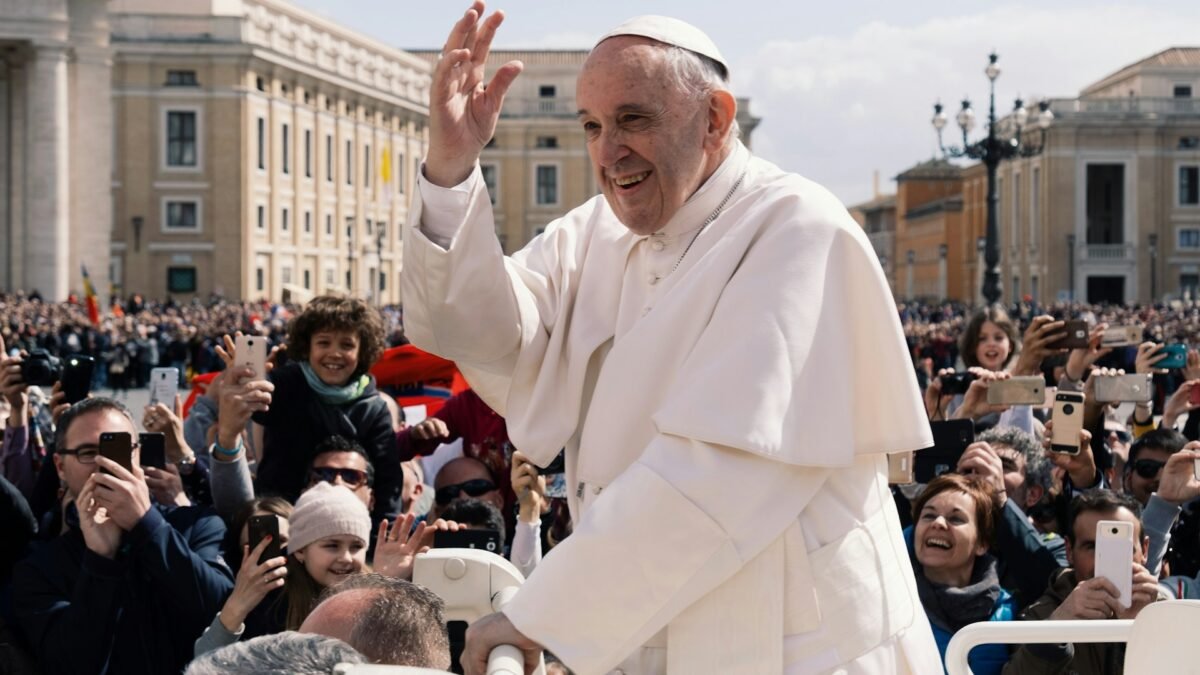
For millions of Filipinos, Pope Francis was the pontiff who came to the Philippines in 2015 and filled Manila and Tacloban with prayer, rain ponchos and quiet devotion. Now, a year and a half after his death, a very different portrait of the man is emerging, one written in his own hand and never meant for a crowd.
His private diary, published on November 24, 2026, opens a rare window into the inner life of the late pope. Its most striking pages describe something few popes have ever committed to paper: encounters with the devil, and a long season of spiritual struggle that the Vatican says shaped part of his papacy.
The details below are as described in published accounts of the book.
The Pope Francis diary: a private record, now public
The diary is being released in 94 countries and five languages, including a 141-page English edition from Penguin Random House. Cardinal Víctor Manuel Fernández, who leads the Vatican’s doctrinal office, curated the volume. Its entries span more than three decades, from December 1992 to August 2024, and some passages are written in a personal code.
Reports say the manuscript was reviewed after Francis died, and that his successor, Pope Leo XIV, had access to it. Sentences that referred to living people were reportedly removed before the book went to print. It is an intimate document, closer to a prayer journal than a papal teaching, and it reads that way.
Encounters with the devil, in the pope’s own words
According to accounts of the diary, Francis wrote of three separate encounters with the devil. He recalled the eyes and the voice of the presence he faced, and described a vision in June 2018 in which he saw the gates of hell. Against it, reports say, he reached for the oldest weapon in a Catholic’s hands: the rosary.
For readers in a country where the rosary sits in handbags, jeepneys and bedside tables, that detail lands close to home. Accounts differ on a few specifics, including where the encounters took place and how the 2018 vision relates to a list he drew up in 2021. We have kept to what is consistent across reports.
A “dark night”: the spiritual crisis behind the papacy
The diary also points to a quieter, less dramatic trial. Cardinal Fernández has described a spiritual crisis that ran through 2021 and 2022, which he likened to a “dark night.” In his telling, Francis wrestled with a pull toward power and self-sufficiency, along with a curiosity that was, in Fernández’s word, reductive. By the end of 2022, he says, the pope had stepped away from that path.
The book also reportedly carries regret over how the Church handled matters in Chile in 2018. Read together, these pages show a leader who was willing to examine his own doubts as honestly as he examined the world’s.
What the Pope Francis diary means for Filipino Catholics
Francis visited the Philippines in January 2015, and many Filipinos still speak of him with unusual warmth. A diary that records fear, doubt and prayer may deepen that connection, because it shows a shepherd who struggled the way ordinary believers do. It may also start new conversations in parishes and families about faith, temptation and perseverance.
Experts in Christian spirituality and mysticism are likely to be the best guides to the passages about the devil, and readers should turn to the published text for the exact wording. In the meantime, the book adds to a story the Church is still absorbing. You can revisit our coverage of the vast crowds that gathered at the Vatican on the eve of Francis’s funeral, the historic moment when King Charles prayed with a pope, and Pope Leo’s call to end war.