Taguig City, 17 March 2026 – Communities in Malabon and Caloocan are now better protected against dengue and leptospirosis. This follows the successful completion of the Sustainable Health Interventions for Eradicating Leptospirosis and Dengue (SHIELD) project. Pru Life UK ran the project in partnership with CARE Philippines.
Prudence Foundation, the community investment arm of Prudential plc, supported the initiative. The project tackled climate‑sensitive health risks in flood‑prone urban areas. Specifically, it strengthened local health systems, improved community preparedness and empowered residents to act early against climate-sensitive diseases.
How the SHIELD Project Was Funded and Implemented
A PhP10M grant from the Climate and Health Resilience Fund (CHRF) funded the initiative. It brought together local governments, barangay health workers (BHWs) and community partners. Together, they addressed dengue and leptospirosis risks in vulnerable communities.
The project ran in Malabon and Caloocan, two National Capital Region (NCR) cities that often face severe flooding. SHIELD worked closely with city health offices and barangay-level responders. In particular, it strengthened disease prevention, raised public health awareness and improved community preparedness during floods and periods of high health risk.
Over the course of the project, SHIELD delivered these key interventions:
- Trained and mobilised close to 200 BHWs to strengthen frontline dengue and leptospirosis prevention and response
- Directly reached 18,800 community members through BHW-led cascading education sessions and door-to-door campaigns
- Taught 1,000 community leaders and residents safer hygiene and sanitation through water, sanitation, and hygiene (WASH) training
- Held community clean‑up drives across seven (7) barangays to reduce environmental risks that spread disease
- Distributed information, education, and communication (IEC) materials and hygiene kits to support households and reinforce key health messages
These activities strengthened local health workers’ capacity to educate residents. They also helped workers spot early warning signs of disease. As a result, communities can act quickly to prevent outbreaks.
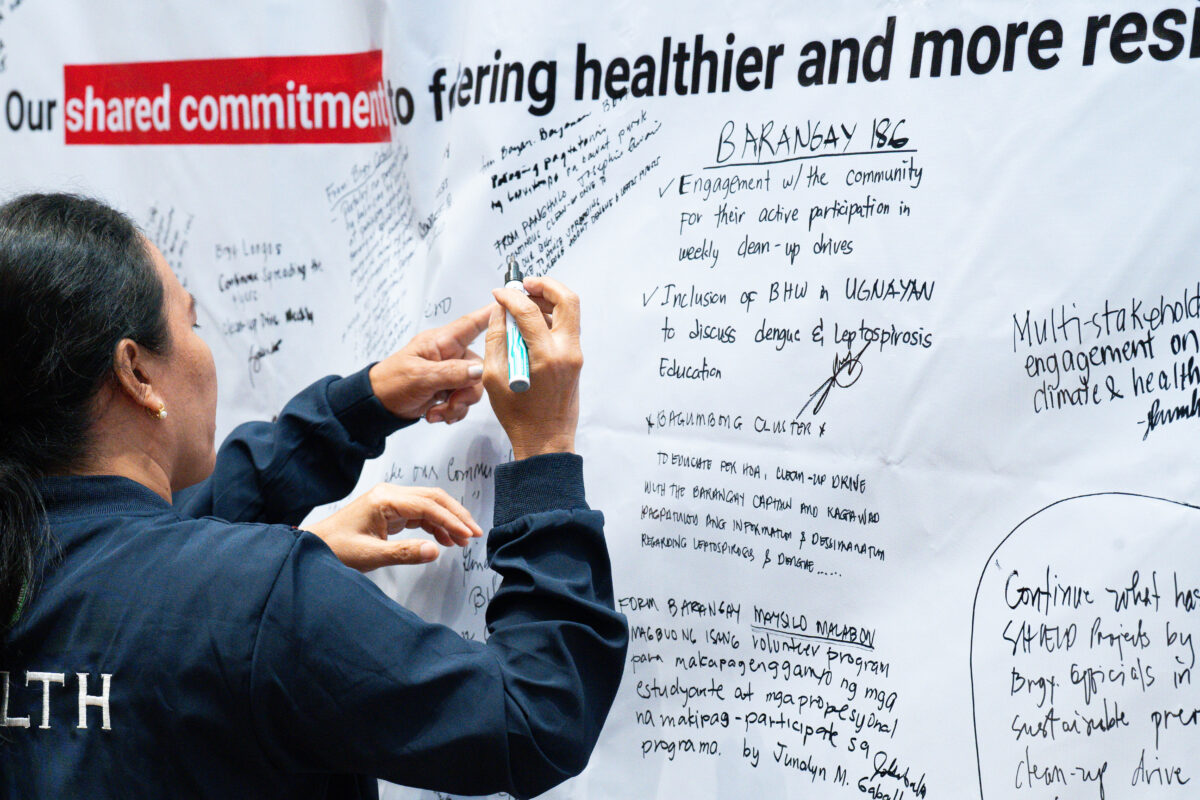
The programme ended with a culminating event. It highlighted the partnership’s key milestones and outcomes. Stakeholders and beneficiaries also made shared commitments to keep supporting their communities. In this way, the progress and skills gained will last beyond the project’s end.
Voices From the SHIELD Project Partners
“In every barangay, there is someone families turn to first when a child has a fever or floodwaters begin to rise. Through the SHIELD Project, we have walked alongside these barangay health workers in Malabon and Caloocan, strengthening their skills, confidence, and capacity to protect their neighbours from threats like leptospirosis and dengue.
Together with Pru Life UK and our local government partners, we are not just delivering a project, we are investing in the people who hold communities together. When we equip local health workers, we strengthen the entire community. And long after the project ends, their knowledge, care, and leadership will continue to safeguard families where it matters most right at home,” said Reiza Dejito, Country Director of CARE Philippines.
Pru Life UK noted that partnerships such as SHIELD show the value of collaboration in building climate and health resilience.
“As we conclude the SHIELD Project, we see this as a foundation for deeper partnerships to address the growing climate–health nexus,” said Atty. Calvin Kohchet‑Chua, Pru Life UK’s Senior Vice President and Chief Legal, Government Relations, and Sustainability Officer.
“Strengthening community health systems through SHIELD supports our broader climate and health advocacy, which recognizes financial security as a critical climate adaptation measure that helps families manage health shocks and build long‑term resilience,” Atty. Kohchet-Chua added.
Moving forward, Pru Life UK will keep supporting initiatives that promote health resilience amid climate change. It also aims to help Filipino communities build safer and healthier futures.