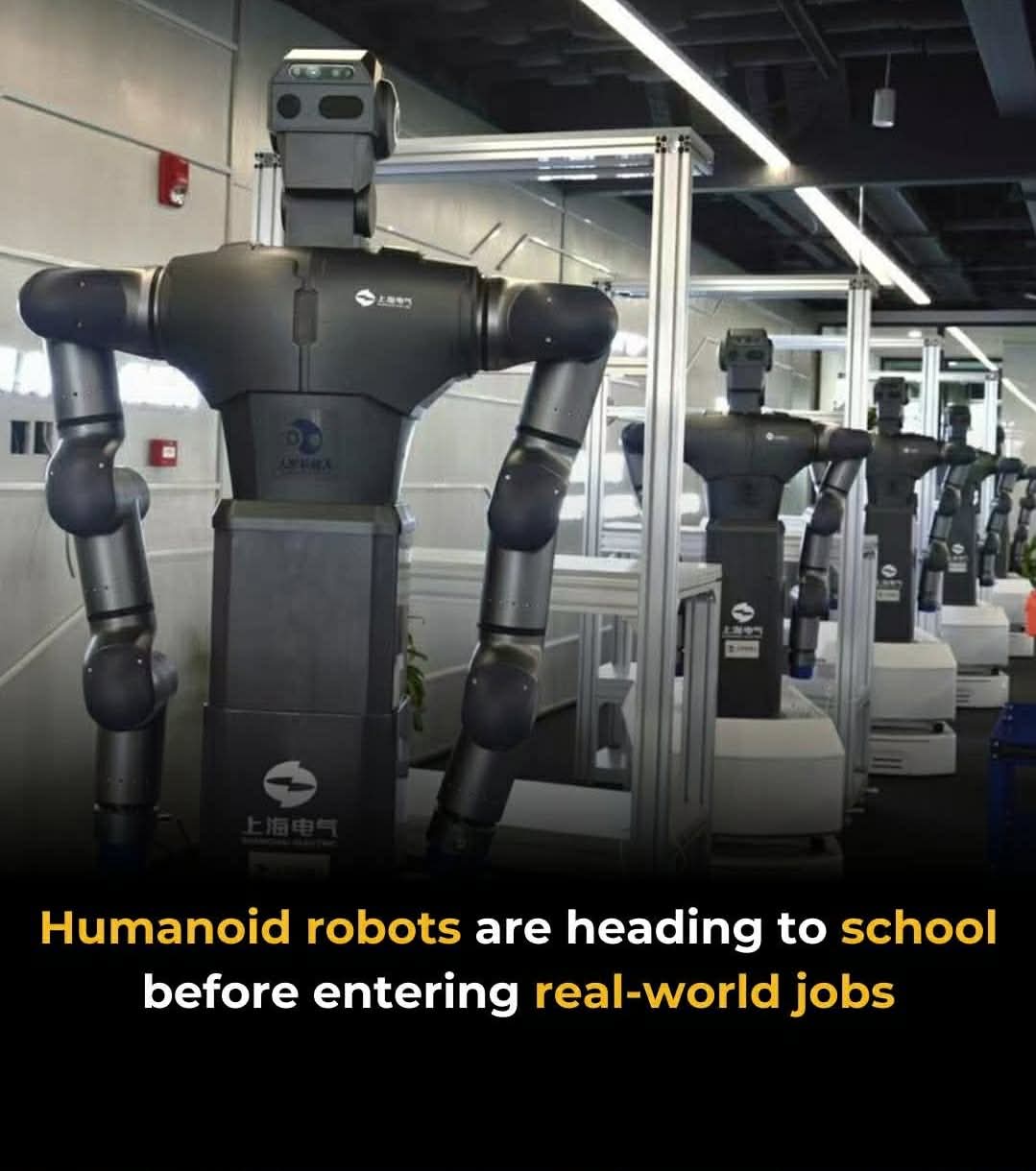
— a massive 5,000-square-meter (53,800-square-foot) facility in Shanghai designed to teach robots how to function in everyday human environments.More than 100 humanoid robots from over a dozen different companies are expected to enroll in the pilot program when the center officially begins operations in July. Instead of focusing on just one robot design, the facility brings together machines of different sizes, shapes, and movement styles to study how humanoids learn and perform in the real world.The robots will practice what researchers call “atomic skills” — basic but essential actions like grasping, picking up, placing, carrying, and organizing objects.
These sound simple for humans, but for robots, tasks like folding clothes or handling kitchen tools still remain surprisingly difficult.According to reports, some robots may repeat a single movement up to 600 times a day while researchers monitor performance and collect training data. The center is expected to generate roughly 50,000 data points daily, adding up to nearly 10 million pieces of information every year.The idea isn’t just to train today’s robots. The real goal is to build a giant shared database that future humanoids can learn from much faster. China’s robotics industry operates more like a connected ecosystem, where companies share infrastructure, suppliers, and now potentially training data as well.
The robots are being prepared for industries ranging from manufacturing and hospitality to healthcare, agriculture, tourism, and domestic assistance. Researchers also hope the shared learning system will eventually create a kind of universal “super brain” that allows humanoids from different companies to improve together.As strange as it sounds, humanoids going to school may soon become a normal part of how robots are developed — not in science fiction, but in real factories and training labs already being built today.